
At Nicnac we believe a website shouldn’t just be a pretty shop window: it should be fast, secure, energy-efficient and guarantee the technological sovereignty of whoever owns it.
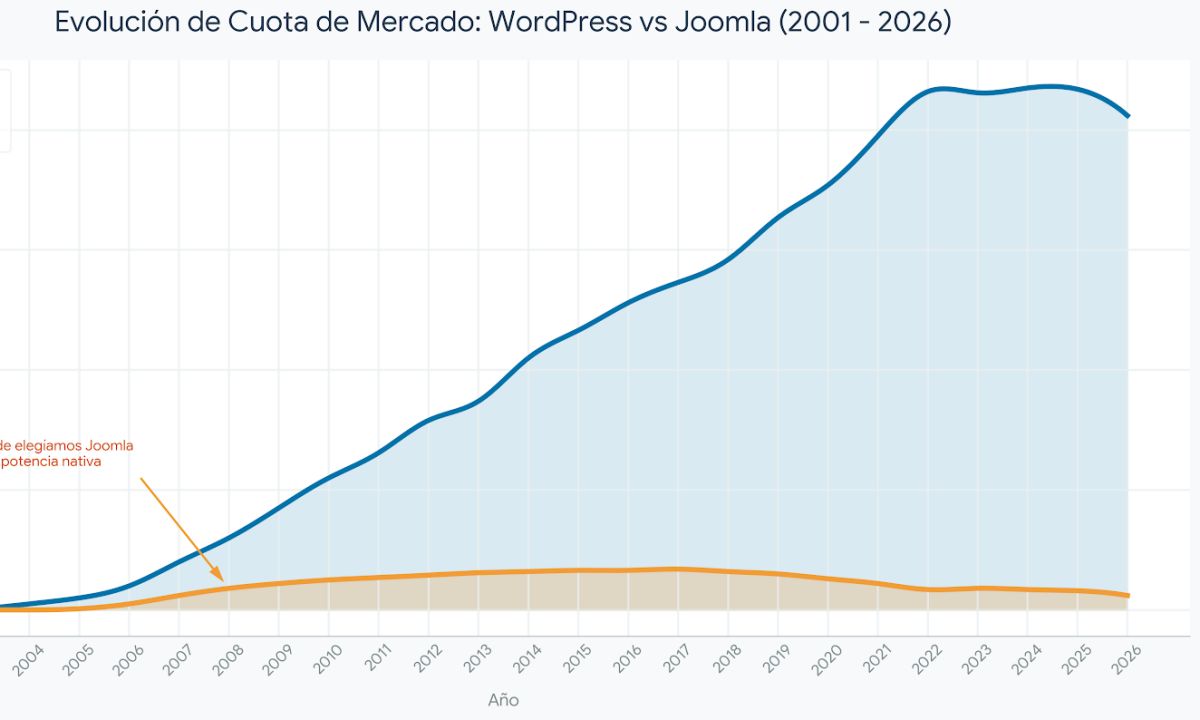
For years, WordPress has been (and still is) the king of the internet. It’s a versatile, democratising tool, but the traditional model has a limit. As websites grow, they pile up plugins, the server has to process larger and more complex databases on every visit and performance inevitably suffers.
That’s why we’ve decided to look towards the future of web architecture. We are currently testing a new architecture: headless WordPress.
What exactly is a ‘headless’ website?
In a traditional WordPress site, the dashboard where you write and manage content and the public website that visitors see are bound together. If one fails, the other goes down.
In a headless architecture (literally, ‘without a head’), we cut that dependency by splitting the project into two independent pieces:
-
The ‘warehouse’: we keep using WordPress, but internally and in isolation. You use the same familiar dashboard to write articles or change photos with ease.
-
The ‘shop window’: the visual layer is custom-built with an open-source framework. This technology simply reads the content from WordPress and generates very lightweight static files, which are what visitors are served.
The technical advantages: speed and security
This change of architecture lets us achieve, with far less effort, metrics that are hard to sustain with traditional WordPress:
-
Speed: because the public website no longer has to run slow database queries or process internal code on every visit, it loads almost instantly. Loading speed is one of the factors Google takes into account for rankings.
-
Smaller attack surface: by taking WordPress out of public access, automated attacks lose their target. Anyone trying to attack your website will only find static HTML files: the database and the dashboard are not exposed to the internet.
In line with our philosophy
Beyond speed, what convinced us about this model is how well it fits our core values.
Sustainability
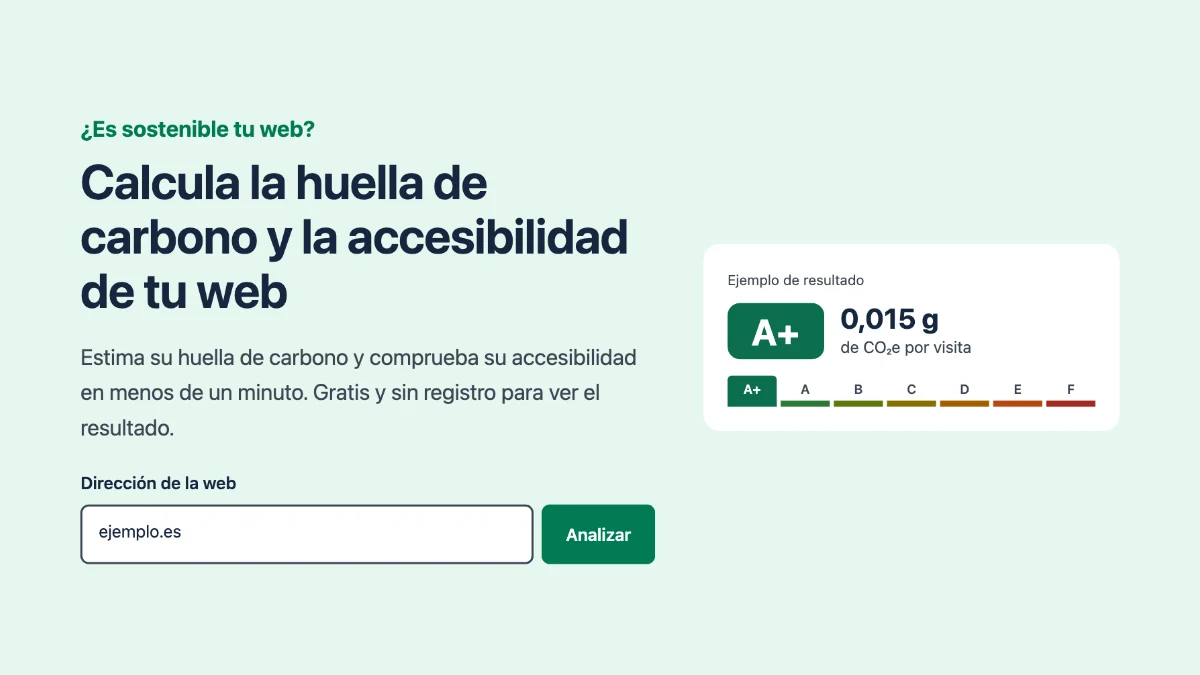
A traditional WordPress site makes the server process data and use energy continuously, on every visit it receives. With this architecture, pre-generated static files are served, so the server does far less work on each visit and uses less energy. Less server work means lower electricity consumption and, therefore, a lower estimated footprint.
Technological sovereignty and open source
We don’t believe in tying clients to closed corporate platforms that can change their rules or prices tomorrow. All the tools that make up our headless architecture are open source. That means we don’t depend on any monopoly. Your data is managed with European providers, the code is free and transparent and, by contract, you can take the website and its content with you whenever you like.
Is headless WordPress right for every website?
Of course, this system isn’t the answer for every project. For digital newspapers or large media outlets that publish continuously, minute by minute, regenerating HTML files every few minutes complicates the system and takes away much of its advantage, so a different architecture usually makes more sense.
However, for most corporate websites, service catalogues and portfolios, this architecture is a very solid option: fast, secure and easy to maintain.
Is a headless build more expensive?
It’s the obvious question any company asks when assessing a project. The short answer is yes: the initial cost of a headless website is higher than a traditional WordPress site, because the visual layer is custom-built with more advanced technologies rather than starting from pre-designed templates or a visual builder.
However, the key is to look at the cumulative cost over the project’s life cycle. Much of the initial investment is recovered over time thanks to several factors:
-
Monthly infrastructure savings: since you don’t need powerful servers constantly processing data, hosting costs are kept to a minimum.
-
No more expensive annual licences: because you don’t depend on visual builders or paid plugins to optimise loading, there are fewer third-party subscriptions.
-
Better return (ROI): a website that loads almost instantly retains more users, converts more visits into customers and comfortably meets the speed metrics Google takes into account.
In the medium and long term, rather than an extra cost, it’s an investment that pays for itself.
Our technology roadmap
We are currently defining and standardising the engineering processes that will underpin this new architecture. Beyond the initial proofs of concept, we are consolidating our deployment protocols and auditing the performance of our infrastructure to make sure it is robust and scalable.
At Nicnac we don’t adopt new technologies out of inertia or to follow the latest industry trend. We do it with a clear purpose: to build a more mature, efficient and conscious internet. Very soon we’ll start applying this new standard to our upcoming projects, raising the quality of the tools we put in our clients’ hands.